
Chief MD, Gangnam
Duk-ha Kim
The trust our patients have placed in this clinic was built on conviction and principle. We intend to hold to both, unchanged, through the next hundred years.
 Seoul
Seoul
Injectable human acellular dermal matrix (hADM) guide
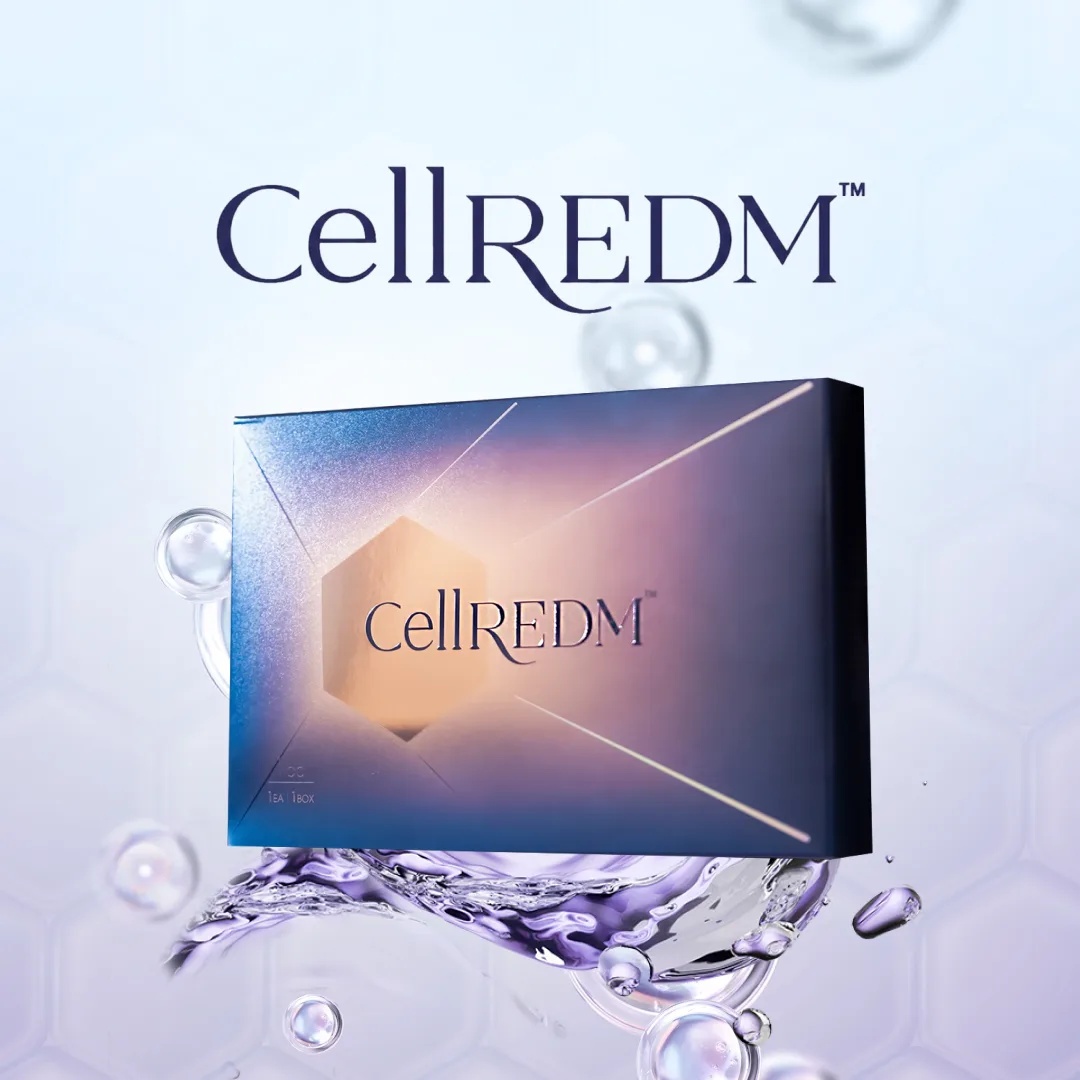
CellREDM is a product HansBiomed describes, in its own announcement, as a human acellular dermal matrix (hADM) processed into particles of about 75 µm for injection. The question this page focuses on is not whether CellREDM works, but which regulatory framework a product built this way sits in — because at least one other injectable hADM product is classified by its own manufacturer as human tissue rather than a medical device, and that distinction changes what kind of paperwork and evidence should exist.
CellREDM is a product manufactured by HansBiomed and described, in the company’s own announcement, as a human acellular dermal matrix (hADM) processed into microparticles of about 75 µm for injection. That announcement is the manufacturer’s own characterization of what the product is made from and how it is processed; it is not a regulatory approval record, and this page treats it as a manufacturer statement rather than as confirmation of a specific medical claim. The purpose of this page is not to judge whether CellREDM works, but to lay out which regulatory category a product built this way is likely to sit in, and what that category does and does not require.

Sources: HansBiomed — CellREDM product announcement (human acellular dermal matrix, 75 µm particles)
The term describes donor human dermis processed to remove its cellular material, leaving the tissue-derived structural scaffold behind — a starting point that is materially different from a synthesized hyaluronic-acid gel. In CellREDM’s case, the manufacturer’s own announcement states that this scaffold is further processed into particles of about 75 µm for injection. That figure comes directly from the manufacturer’s announcement, and this page does not add clinical meaning to it beyond what that announcement states.
Sources: HansBiomed — CellREDM product announcement (human acellular dermal matrix, 75 µm particles)
A synthetic hyaluronic-acid filler is typically reviewed and licensed as a medical device, item by item. A product built from processed human tissue can instead be handled under a separate framework built around donor screening, tissue banking, and traceability rather than premarket device review. Which of those two frameworks any specific named product sits under is a fact about that product’s own registration, not something to assume from the raw material alone — it is a detail to verify directly against that product’s own registration record, through the clinic administering it or the manufacturer.
Sources: Humedix — Elravie Re2O product page, showing an injectable hADM listed under the category "Human tissue"MFDS — proposed amendment to the Rules on the Safety of Human Tissue (public notice 2026-340)
What can be confirmed, from a manufacturer’s own site rather than from a news report, is that at least one other injectable hADM product is handled outside the medical-device framework. Humedix’s own product page for Elravie Re2O — a different injectable hADM product made by a different manufacturer, L&C Bio — lists it under a category labelled "Human tissue," presented separately from that same site’s "Medical Device" and "Cosmetic" categories. That is a manufacturer’s own classification of its own product, on its own page — not a claim about CellREDM. It does show that an injectable made from processed human tissue can be classified as human tissue rather than as a device, which is why this page treats "which category" as an open question for CellREDM rather than an assumption.
Korea’s human-tissue safety rules are written and administered separately from the item-by-item approval system used for medical devices. Tissue banks and the medical institutions that transplant human tissue carry their own reporting and safety obligations to the Ministry of Food and Drug Safety (MFDS), distinct from a device manufacturer’s premarket approval file. This matters to a reader because the two systems produce different kinds of records: a device record typically carries an approval number and a stated indication, while a tissue-handling record is built around donor screening, processing, and adverse-event reporting instead. Knowing which system a specific product sits under tells you which kind of paperwork is even the right one to ask a clinic for.
Sources: MFDS — proposed amendment to the Rules on the Safety of Human Tissue (public notice 2026-340)
MFDS put forward a proposed amendment to the Rules on the Safety of Human Tissue as public notice 2026-340. As drafted, the amendment shortens the interval at which tissue banks and tissue-transplant medical institutions must report adverse events to MFDS, moving it from once a year to twice a year. Public comment on that draft closed on 25 August 2026. Two things are worth stating precisely: this is a proposal affecting the tissue-safety rules in general, not a decision about any named product, and this page can only describe what the public notice itself says, not its final, enacted form.
Sources: MFDS — proposed amendment to the Rules on the Safety of Human Tissue (public notice 2026-340)
A shorter reporting cycle changes how quickly a slow-building problem across a tissue bank’s supply can surface in regulatory records, compared with reporting once a year. It does not change the safety of any individual injection performed today, and it is not evidence that a problem exists — it is a change to how often the reporting pipeline reports what it sees. For a reader weighing a treatment, the practical relevance is narrower than the policy sounds: it shows that human-tissue products in general sit inside an active regulatory process in Korea, and that reporting obligations around them are being tightened rather than loosened at the time this page was written.
Sources: MFDS — proposed amendment to the Rules on the Safety of Human Tissue (public notice 2026-340)
A specific named product’s own regulatory registration is a detail to verify directly — through the clinic administering it or the manufacturer itself — rather than assume from a raw-material description or a marketing claim. Ask to see that record on the product’s own packaging or in a document traceable back to the manufacturer, rather than accepting a claim because it sounds official.
Sources: HansBiomed — CellREDM product announcement (human acellular dermal matrix, 75 µm particles)MFDS — proposed amendment to the Rules on the Safety of Human Tissue (public notice 2026-340)
No peer-reviewed clinical trial of CellREDM itself has been identified for this page. The manufacturer’s own product announcement describes what the material is and how it is processed; it is not a clinical study, and it does not report outcomes, follow-up data, or a comparison group. That distinction — a manufacturer’s technical description of a product versus an independent, peer-reviewed trial of that product — is the single most important line on this page, because the two are easy to blur in marketing material and hard to separate once a figure has been repeated a few times.
Sources: HansBiomed — CellREDM product announcement (human acellular dermal matrix, 75 µm particles)
The only peer-reviewed randomized trial identified in this product category tested Elravie Re2O, an injectable hADM made by L&C Bio — a different company’s different product, not CellREDM. It was published in the International Journal of Molecular Sciences (2026;27(5):2193). The design was a split-face study: 20 participants, each serving as their own comparison, with one side of the face treated with the injectable hADM and the other side treated with a hyaluronic-acid skin booster as the control, followed for 20 weeks. The published paper discloses that one author has a conflict of interest. Naming the product, the sample size, the design, the comparator, and the disclosed conflict together, in one place, is the point of this section: none of it transfers to a different manufacturer’s different product.
Different manufacturing processes for a tissue-derived material can plausibly produce a different final product, even when both are described with the same acronym, hADM — particle size, processing method, and donor-screening protocol can all differ between one company’s product and another’s. Regulatory and scientific practice treats each named product as its own entity precisely because of that: a trial result belongs to the product tested, not to a category name. So a 20-week, 20-person split-face result for Elravie Re2O describes Elravie Re2O. It cannot be read as a result for CellREDM, and a consultation that cites this trial’s numbers while discussing CellREDM is citing a different product’s data.
Sources: Int J Mol Sci 2026;27(5):2193 — randomized split-face trial of a DIFFERENT injectable hADM product (Elravie Re2O, L&C Bio)HansBiomed — CellREDM product announcement (human acellular dermal matrix, 75 µm particles)
If a product is handled under Korea’s human-tissue framework rather than as a device, the chain that matters is donor screening, processing, and tissue-bank registration, and a clinic should be able to say plainly whether the specific product it uses passes through a registered tissue bank. That question is answerable by the clinic in a way that a general marketing description is not. It is a fair, specific question to ask before treatment: which tissue bank or distributor supplies this specific product, and can that be shown on packaging or accompanying documentation.
Sources: MFDS — proposed amendment to the Rules on the Safety of Human Tissue (public notice 2026-340)Humedix — Elravie Re2O product page, showing an injectable hADM listed under the category "Human tissue"
No source identified for this page reports a duration for CellREDM itself, and that absence follows directly from the gap already described above: no peer-reviewed clinical trial of this specific product has been identified, so there is no follow-up period, of any length, that has actually been measured on it. The only published trial in this product category followed participants for 20 weeks, and it tested Elravie Re2O — a different manufacturer’s different product — using a split-face design against a hyaluronic-acid booster as the comparison; as already established, a result measured on that product does not transfer to CellREDM, so even a 20-week figure cannot honestly be quoted as this product’s duration. What would generally decide how long a tissue-derived scaffold like this is expected to remain present or produce a visible change — particle size, how the donor tissue was processed, injection depth, and each person’s own rate of incorporating and remodeling the material — is not quantified for CellREDM in any source used here. The consultation question that follows is direct: if a clinic states a specific duration or session interval for CellREDM, ask what document that figure comes from, and confirm it names CellREDM itself rather than a different hADM product carrying a similar description.
Sources: Int J Mol Sci 2026;27(5):2193 — randomized split-face trial of a DIFFERENT injectable hADM product (Elravie Re2O, L&C Bio)HansBiomed — CellREDM product announcement (human acellular dermal matrix, 75 µm particles)
General injection risks associated with placing any material under the skin — infection, a delayed nodule, an allergic-type reaction — are recognized possibilities for tissue-derived injectables in general. Stating a specific complication rate for CellREDM without a named source behind it would be inventing precision that does not exist, so this page does not publish one; a clinic quoting a specific, low complication rate for CellREDM should be asked where that number comes from.
Sources: Int J Mol Sci 2026;27(5):2193 — randomized split-face trial of a DIFFERENT injectable hADM product (Elravie Re2O, L&C Bio)HansBiomed — CellREDM product announcement (human acellular dermal matrix, 75 µm particles)
Hyaluronic-acid injectables — including fillers and skin-booster products — are made from a synthesized polysaccharide, not from donor tissue, and most are reviewed as medical devices with a device-style approval record. An injectable hADM product starts from donor human tissue processed to remove cells, and, as shown by at least one other product in this category, can instead be classified and handled as human tissue. The material, the manufacturing process, and potentially the regulatory pathway are different starting points, so a side-by-side claim about which lasts longer or which is safer between the two categories is not something the sources reviewed here support. What is supportable is that they are not administratively or materially the same kind of product, and asking which one is being offered is a meaningful question on its own.
Sources: Humedix — Elravie Re2O product page, showing an injectable hADM listed under the category "Human tissue"HansBiomed — CellREDM product announcement (human acellular dermal matrix, 75 µm particles)
Ask which named product and which manufacturer, and ask to see the outer box before it is opened. Ask whether the specific product passes through a registered tissue bank, and if so, which one. Ask what document the clinic relies on to describe the product’s safety — a manufacturer announcement, a peer-reviewed trial of that exact product, or a trial of a different product being generalized to this one — and ask for it to be named specifically, since the section above shows that the one published trial in this category is not a CellREDM trial. And ask what the clinic’s own procedure is if you notice a lump, redness, or another change afterward: who to contact, what they will do, and how that gets reported onward. None of these questions requires you to already know the answer; they only require the clinic to be willing to name specifics rather than a category.
Sources: HansBiomed — CellREDM product announcement (human acellular dermal matrix, 75 µm particles)Humedix — Elravie Re2O product page, showing an injectable hADM listed under the category "Human tissue"Int J Mol Sci 2026;27(5):2193 — randomized split-face trial of a DIFFERENT injectable hADM product (Elravie Re2O, L&C Bio)MFDS — proposed amendment to the Rules on the Safety of Human Tissue (public notice 2026-340)
These are two different named products in the same broad material category — not two brands of the same regulatory record. Compare what is actually confirmed about each one before assuming the category tells you anything about the specific product.
| What you might be offered | What is confirmed | Regulatory category (as shown by the source) | Peer-reviewed clinical data |
|---|---|---|---|
| CellREDM (HansBiomed) | A hADM product processed into roughly 75 µm particles, per the manufacturer’s own announcement | A detail to verify directly with the clinic or the manufacturer, not something implied by the material description | None identified for this specific product |
| Elravie Re2O (Humedix / L&C Bio) — a different hADM product | An injectable hADM listed on its manufacturer’s own product page | Listed under a "Human tissue" category, separate from "Medical Device" and "Cosmetic" on that same page | One published randomized split-face trial (n=20, 20 weeks, HA skin-booster control; one author discloses a conflict of interest) — this trial does not test CellREDM |
This table compares what is documented about two different products in the same material category. It does not mean CellREDM has been tested, approved, or found equivalent to Elravie Re2O, and it is not a ranking of either product.
Sources: HansBiomed — CellREDM product announcement (human acellular dermal matrix, 75 µm particles)Humedix — Elravie Re2O product page, showing an injectable hADM listed under the category "Human tissue"Int J Mol Sci 2026;27(5):2193 — randomized split-face trial of a DIFFERENT injectable hADM product (Elravie Re2O, L&C Bio)
Care is provided by the medical team at the branch you select. These clinicians lead the three branches linked from this guide; confirm the doctor assigned to your visit with that branch.
Chief MD, Gangnam
The trust our patients have placed in this clinic was built on conviction and principle. We intend to hold to both, unchanged, through the next hundred years.

Chief MD, Myeongdong
I want to be thinking about how the patient feels right up to the last moment of the procedure.

Chief MD, Hongdae
I will give my best with the attentiveness to catch even the smallest change.
Listed branch medical team — not a medical-review byline for this article.
No — the manufacturer describes it as a human acellular dermal matrix (hADM), a tissue-derived material processed into particles of about 75 µm for injection, not a synthesized hyaluronic-acid gel. That difference in raw material is also why this page treats the regulatory pathway as an open question rather than assuming it follows the same device-approval route as an HA filler.
Human acellular dermal matrix — donor human dermis processed to remove its cellular material, leaving the tissue-derived scaffold, which in CellREDM’s case is further processed into particles of about 75 µm for injection, per the manufacturer’s own announcement.
A named product’s MFDS approval or item-permit number is a document to ask the clinic or manufacturer to show directly, since regulatory category can differ between products in the same material class — Elravie Re2O, another hADM product, is listed under a "Human tissue" category rather than "Medical Device" by its own manufacturer. Treat the specific number as something to see on paper, not a claim to accept on its own.
This page has not found a primary MFDS document classifying CellREDM specifically, so it does not state that classification. What is confirmed is that at least one other injectable hADM product, Elravie Re2O, is listed by its own manufacturer under a "Human tissue" category rather than "Medical Device" — showing that this category of product can be classified that way, without confirming it for CellREDM by name.
No peer-reviewed clinical trial of CellREDM itself has been identified for this page. The manufacturer’s own announcement describes the material and its processing, not trial outcomes.
It tested a different product, Elravie Re2O, made by a different company, L&C Bio — not CellREDM. Published in the International Journal of Molecular Sciences (2026;27(5):2193), it was a 20-person split-face design comparing the injectable hADM against a hyaluronic-acid skin booster over 20 weeks, and it discloses that one author has a conflict of interest.
No — a trial result belongs to the specific product tested, and processing method, particle size, and donor-screening protocol can all differ between one company’s hADM product and another’s. Citing Elravie Re2O’s 20-week outcome while discussing CellREDM is citing a different product’s data.
It does not approve any specific product — it is a proposed amendment to Korea’s general Rules on the Safety of Human Tissue, public notice 2026-340, which would shorten the adverse-event reporting cycle for tissue banks and tissue-transplant institutions from once a year to twice a year, with public comment closing 25 August 2026.
No — it is a change to how often the reporting pipeline for human-tissue products in general reports to MFDS, not a finding about any named product, and it does not change the safety of any individual injection performed today.
A complication-rate figure specific to CellREDM would need a named published source behind it; this page states one only when that source exists, and a specific low percentage quoted to you without a named source is a reason to ask where the number comes from rather than take it as reassurance.
The raw material differs: a hyaluronic-acid skin booster is made from a synthesized polysaccharide typically reviewed as a medical device, while an hADM product like CellREDM starts from donor human tissue processed to remove cells, and at least one other product in this category is classified as human tissue rather than as a device. That is a difference in material and possibly in regulatory pathway, not a claim that one performs better than the other.
Ask which manufacturer and which named product, whether it passes through a registered tissue bank, and ask to see the outer box and any traceable documentation before it is opened — donor-sourced material carries a traceability chain that a synthetic gel does not, and a clinic should be able to speak to it specifically.
Contact the treating clinic and ask what its reporting procedure is, since a tissue-derived product may be reportable through the tissue-safety framework in addition to any device-style complaint route. Agreeing on that contact plan before treatment, rather than after, is the more useful sequence.
This page does not state any such registration, because none was identified in the sources reviewed, and this page does not use a foreign registration status as a stand-in for a Korean regulatory record it has not itself confirmed.
We started in Gangnam in 2006 and the network now runs 17 branches across Korea. The line we work to is skin transformation woven into everyday life — care you can keep up with, rather than one dramatic change.
Free Consultation
There is no inquiry form on this page. Once you have picked a branch above, open that branch’s site or the official reservation center and choose a time yourself.