
Chief MD, Gangnam
Duk-ha Kim
The trust our patients have placed in this clinic was built on conviction and principle. We intend to hold to both, unchanged, through the next hundred years.
 Seoul
Seoul

Facial-volume injectable guide
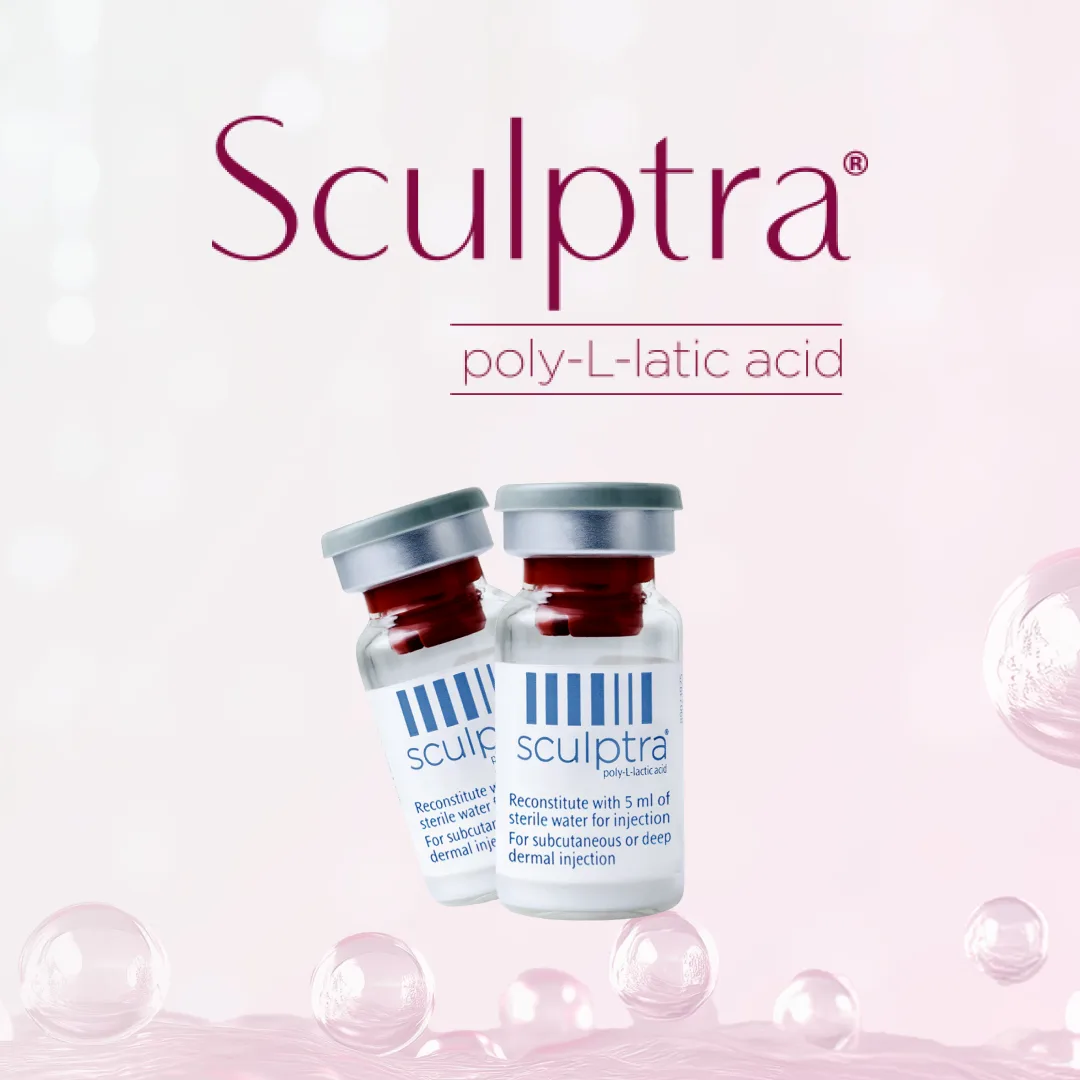
Sculptra is a sterile injectable implant containing poly-L-lactic acid (PLLA) microparticles. In the U.S. it is indicated for specified facial wrinkles and cheek lines in immunocompetent adults, with correction developing gradually over several sessions.
Sculptra is a sterile injectable implant containing poly-L-lactic acid (PLLA) microparticles. In the U.S. it is indicated for specified facial wrinkles and cheek lines in immunocompetent adults.

PLLA is a biocompatible, biodegradable synthetic polymer. Sculptra is placed in deeper tissue and improvement appears gradually over several weeks as treatment effects develop; Galderma describes it as stimulating collagen production.
Sources: Sculptra e-IFU (USA) · GaldermaFDA-approved dermal filler comparison
The U.S. IFU covers shallow-to-deep nasolabial-fold contour deficiencies, other facial wrinkles and fine lines or wrinkles in the cheek region. It prohibits injection into the lip vermilion. Peri-orbital injection has not been studied, and an increased risk of papules and nodules has been reported. These statements describe U.S. labeling, not Korean approval.
Sources: Sculptra e-IFU (USA) · Galderma
The U.S. IFU does not state how long a correction lasts once the treatment plan is finished; what it sets out instead is the onset pattern — improvement developing gradually over several weeks — and a session plan of up to four treatments spaced according to the indication. Because PLLA is described as stimulating a person’s own collagen production rather than sitting in place the way a filler does, how much correction is achieved and how long it remains visible depends on individual response across that full session plan, not on a single injection. No re-treatment interval for maintaining results is set out in the sources cited here. Confirm at consultation how many sessions are planned for the treatment area, the spacing between them, and what the clinic bases any proposed re-treatment timing on.
Sources: Sculptra e-IFU (USA) · Galderma
Discuss the exact treatment area, expected degree and timing of change, likely number of sessions, injector training, allergy and scar history, medicines affecting bleeding or immunity, prior procedures, and the plan for managing vascular complications or delayed nodules.
Sources: Sculptra e-IFU (USA) · Galderma
A trained healthcare professional assesses and maps the area, reconstitutes the product, and places small amounts through multiple injections in the approved tissue plane. Up to four sessions may be needed; intervals depend on the indication and must follow the IFU.
Sources: Sculptra e-IFU (USA) · Galderma
Common initial reactions include swelling, tenderness, redness, pain, bruising, bleeding, itching and lumps at the injection site. Many are mild or moderate, but delayed papules or nodules can occur days to months later.
Sources: Sculptra e-IFU (USA) · GaldermaGalderma US safety summary
Do not use in people hypersensitive to an ingredient, with severe allergy or anaphylaxis history, multiple severe allergies, or a history or susceptibility to keloid or hypertrophic scarring. If lidocaine is added, amide-local-anesthetic allergy also matters. Defer treatment where active inflammation or infection is present. Safety is not established in pregnancy, breastfeeding or under age 18.
Sources: Sculptra e-IFU (USA) · GaldermaGalderma US safety summary
Seek immediate assessment for any vision change, sudden trouble speaking, facial droop, weakness or numbness, difficulty walking, severe headache, dizziness, confusion, skin blanching or unusual severe pain during or shortly after injection. Contact the clinic for persistent or worsening swelling, redness, pain, skin-color change, or new delayed lumps.
Sources: Sculptra e-IFU (USA) · Galderma
Sculptra is a PLLA injectable whose correction develops gradually and is commonly planned as a treatment series. HA fillers are water-binding gels that create a direct smoothing or filling effect. Rejuran is PN-based and positioned for temporary facial-wrinkle improvement. Product choice should follow the anatomy and treatment goal.
Sources: Sculptra e-IFU (USA) · GaldermaFDA-approved dermal filler comparisonREJURAN basic product (PN) · PharmaResearch official
These categories are not interchangeable. Compare the core material and the kind of change you want before comparing price or brand names.
| Treatment | Core material or category | Useful starting question | Confirm before choosing |
|---|---|---|---|
| Sculptra | Poly-L-lactic acid (PLLA) | Is a gradually developing, series-based volumizing effect the goal? | Country-specific label, injection plane and session plan |
| Rejuran (PN) | Polynucleotide-based injectable | Is the goal temporary wrinkle improvement rather than added volume? | Exact PN product and its local approval |
| HA filler | Hyaluronic-acid gel; formulation varies by product | Is an immediate, reversible filling effect the goal? | Exact filler, approved area and reversibility limits |
This table is a consultation map, not a ranking or treatment recommendation. Approvals, formulations and evidence vary by country and indication.
Sources: Sculptra e-IFU (USA) · GaldermaFDA-approved dermal filler comparisonREJURAN basic product (PN) · PharmaResearch official
Care is provided by the medical team at the branch you select. These clinicians lead the three branches linked from this guide; confirm the doctor assigned to your visit with that branch.
Chief MD, Gangnam
The trust our patients have placed in this clinic was built on conviction and principle. We intend to hold to both, unchanged, through the next hundred years.

Chief MD, Myeongdong
I want to be thinking about how the patient feels right up to the last moment of the procedure.

Chief MD, Hongdae
I will give my best with the attentiveness to catch even the smallest change.
Listed branch medical team — not a medical-review byline for this article.
No — Sculptra’s main microparticle material is poly-L-lactic acid (PLLA), not hyaluronic acid. The U.S. instructions for use describe it as a sterile injectable implant placed in deeper tissue, with correction that develops gradually rather than on the treatment day.
Different materials: Sculptra is PLLA-based, HA filler is a hyaluronic-acid gel. The U.S. label for Sculptra covers nasolabial folds, other facial wrinkles and cheek lines, with change appearing gradually over several weeks and often across a planned series. Hyaluronic-acid products sit in a separate material category on the FDA’s approved dermal filler list and are chosen when an immediate, gel-based filling effect is the goal. Bring the exact area and the kind of change you want to the consultation instead of a brand name.
They answer different goals rather than competing on strength. Sculptra is a PLLA injectable planned as a series in which correction develops gradually; Rejuran is a polynucleotide (PN) injectable that PharmaResearch presents for temporary improvement of facial wrinkles. Confirm the exact product, the tissue layer treated, and the approval that applies in the country where you are treated.
No — "collagen stimulator" is a marketing umbrella, and the base material differs by product. Sculptra’s microparticles are PLLA according to its U.S. labeling, and the FDA’s approved dermal filler list identifies each product by material and approved use, so two products advertised with the same phrase can carry very different labels. Ask for the product name, its material, and the labeling that applies where you are treated.
No — the intended correction develops gradually over several weeks rather than on the treatment day. Early fullness can partly reflect reconstitution fluid and swelling. Ask the clinic what change is expected and when it will be assessed.
No — 24 months is a study follow-up period, not a guaranteed personal duration. A U.S. randomized trial for cheek wrinkles found improvement maintained through a 24-month follow-up compared with no treatment. That describes the study population’s average finding over that period, not a personal guarantee; individual duration varies.
The U.S. instructions for use say up to four sessions may be needed. The exact number and interval depend on the indication and individual assessment, and must follow the labeling that applies where treatment is performed.
Pain, tenderness, swelling, redness and bruising at the injection site are listed as common reactions. Most are described as mild to moderate, and bleeding, itching and lumps are also listed. The product may be reconstituted with lidocaine, so declare any amide local-anesthetic allergy beforehand. Because papules or nodules can appear days to months later, agree on a follow-up route with the clinic before you travel home.
The U.S. IFU says not to inject the lip vermilion and states peri-orbital use has not been studied and has a reported increased risk of papules and nodules. These are two separate statements: one is a labeled prohibition, the other is an unstudied area with a reported risk. Both describe U.S. labeling, so confirm the plan for your area with the treating clinic.
No — papules or nodules may appear days to months after injection and can take time to resolve. Swelling and small lumps can also occur right away as a common early reaction. Report any new or persisting lump to the treating clinic rather than waiting for it to settle on its own.
U.S. labeling rules out several groups, so candidacy is decided by history rather than by age alone. It excludes people hypersensitive to an ingredient and those with a history of severe allergy or anaphylaxis, multiple severe allergies, or keloid or hypertrophic scarring. Treatment is deferred where the area has active inflammation or infection, and safety is not established in pregnancy, breastfeeding or under age 18. The U.S. indication is written for immunocompetent adults, so bring your full allergy, scar, medication and immune history to the consultation.
Sculptra holds a U.S. FDA premarket approval (PMA P030050S039) and appears on the FDA’s approved dermal filler list. That record describes U.S. labeling only; it does not state anything about Korean approval or scope, and this page cannot confirm the Korean status. Ask the clinic which product and labeling it uses domestically, and confirm the injector’s qualification.
This page does not publish prices, so compare quotes by what one session actually includes. Line up the treated area, how many sessions the plan assumes, whether follow-up visits and aftercare are included, and the exact product used. A single headline figure is not comparable between clinics unless those items match.
Only a properly licensed healthcare professional trained in Sculptra’s approved indications and injection requirements should administer it. You can ask who will inject, what training they have, and how vascular complications or delayed nodules would be managed.
We started in Gangnam in 2006 and the network now runs 17 branches across Korea. The line we work to is skin transformation woven into everyday life — care you can keep up with, rather than one dramatic change.
Free Consultation
There is no inquiry form on this page. Once you have picked a branch above, open that branch’s site or the official reservation center and choose a time yourself.