
Chief MD, Gangnam
Duk-ha Kim
The trust our patients have placed in this clinic was built on conviction and principle. We intend to hold to both, unchanged, through the next hundred years.
 Seoul
Seoul

Focused-ultrasound (HIFU) evidence guide
Doublo Gold is a focused-ultrasound (HIFU) device in Hironic’s Doublo line. This guide separates the maker’s own specification sheet from two small, uncontrolled peer-reviewed studies of a “Doublo” device that does not state its hardware generation — so a result from either paper cannot be assumed to describe the specific machine sold today as Doublo Gold.
Doublo Gold is a focused-ultrasound (HIFU) device made by the Korean manufacturer Hironic. It belongs to Hironic’s Doublo-branded line, which delivers focused ultrasound to set tissue depths for lifting- and tightening-oriented treatment planning.
Sources: Hironic — Doublo product page
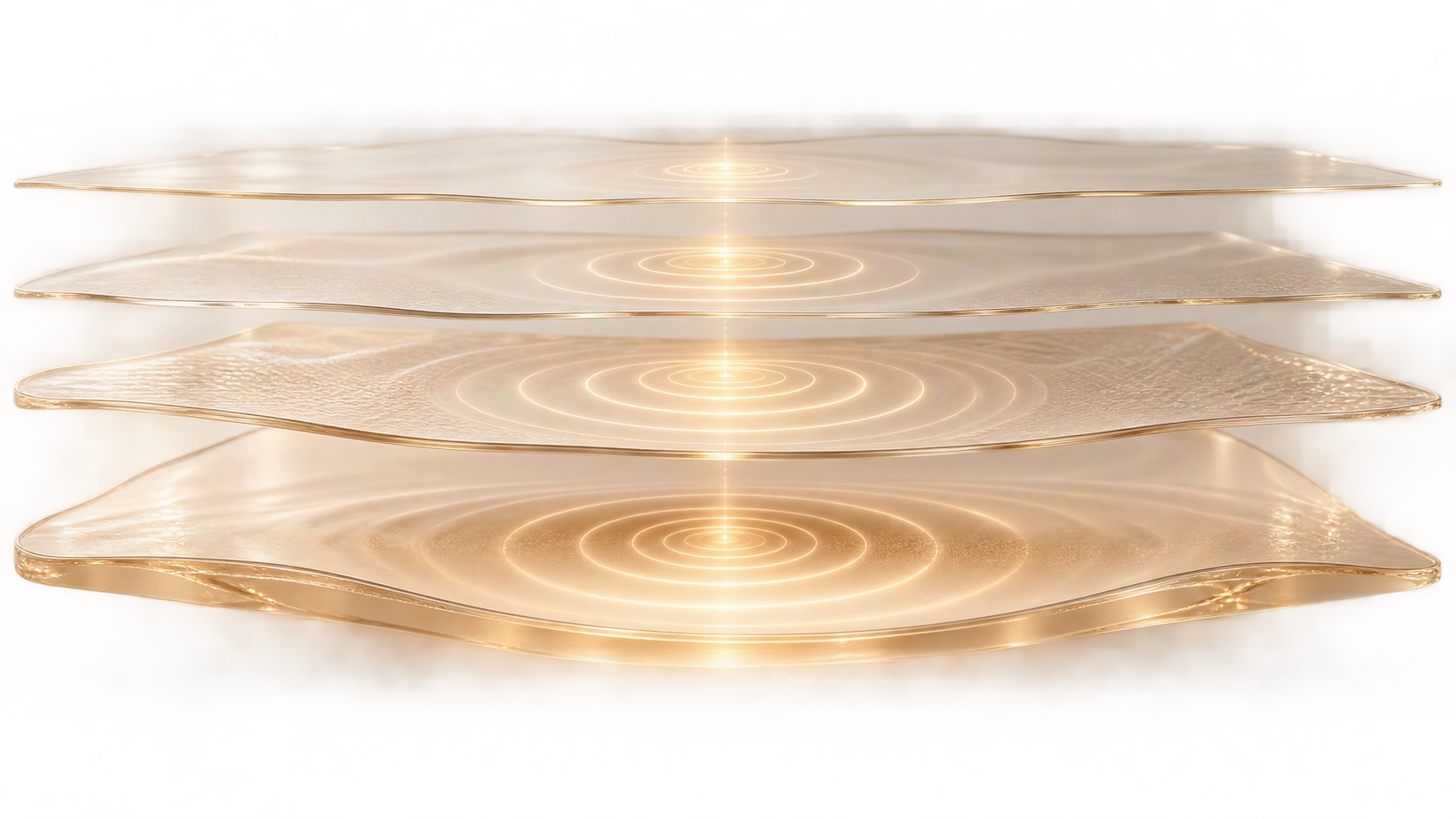
Focused ultrasound concentrates acoustic energy at a selected point beneath the skin, producing localized heating there while leaving the tissue above largely unaffected. This describes the general mechanism shared by HIFU devices, including the Doublo line — it explains how the energy is delivered, not a specific result for an individual patient.
Sources: Hironic — Doublo product page
Hironic’s product page lists a target depth range of 3.0 to 4.5 mm for the Doublo line, delivered through interchangeable cartridges. This figure is manufacturer specification, not a finding from either peer-reviewed study discussed below, and the two should not be blended into one number.
Sources: Hironic — Doublo product page
Hironic lists M7, D4 and D7 cartridges for the Doublo line, each built to deliver energy at a depth within the maker’s 3.0–4.5 mm range. A cartridge code tells you the depth and handpiece in use for a given area; it does not by itself identify which hardware generation of the machine is running it, so both the cartridge and the exact machine should be confirmed at consultation.
Sources: Hironic — Doublo product page
A peer-reviewed study followed 43 participants treated with a device the paper calls “Doublo” for three months, with no control group. It reports improvement in 52.9% of participants, based on investigator and/or patient assessment rather than an objective imaging endpoint. The abstract lists no author affiliated with the manufacturer.
Sources: Study of a Doublo-line HIFU device (n=43, no control group, 3-month follow-up)
A separate peer-reviewed study followed 11 participants treated with a device the paper calls “Doublo” for two months, also with no control group, and included histological analysis of treated skin. As with the larger study, the abstract lists no manufacturer-affiliated author.
Sources: Study of a Doublo-line HIFU device including histology (n=11, no control group, 2-month follow-up)
Both papers refer to the device only as “Doublo,” without a model number or hardware generation. Because a single commercial name can cover more than one hardware generation over time, a result reported for “a Doublo device” cannot be read as evidence for the specific machine sold today as Doublo Gold unless the treating clinic can show it is the same generation the study used — and neither paper supplies enough detail to make that link.
Sources: Study of a Doublo-line HIFU device (n=43, no control group, 3-month follow-up)Study of a Doublo-line HIFU device including histology (n=11, no control group, 2-month follow-up)
Depth accuracy, energy delivery and cartridge design can change between generations of a device that keeps the same marketing name. A finding produced on one generation does not automatically carry over to an earlier or later generation sold under the same name, which is why a device name by itself — “Doublo,” “Doublo Gold” or otherwise — is not enough to tie a study to a specific machine.
Tissue-level (histology) analysis is uncommon in HIFU research generally, so a study that includes it — like the 11-participant paper above — adds a type of evidence most device papers do not offer. That value sits alongside the same limits already noted for this study: 11 participants, no control group, a two-month follow-up, and no stated device generation.
Sources: Study of a Doublo-line HIFU device including histology (n=11, no control group, 2-month follow-up)
Without a group that received no treatment or a different treatment for comparison, a reported improvement rate reflects what happened in the treated group alone — it does not separate the device’s contribution from other factors such as time or skincare changes. The 52.9% figure from the 43-participant study should be read together with that design, not quoted on its own.
Sources: Study of a Doublo-line HIFU device (n=43, no control group, 3-month follow-up)
Hironic’s Doublo line has carried its core commercial name through more than one hardware update over time. That naming pattern is precisely why a paper that says only “Doublo” cannot be assumed to describe today’s Doublo Gold unit — the name identifies a product family, not one fixed machine.
Sources: Hironic — Doublo product page
Shot count, cartridge depth and energy settings are specific to each manufacturer’s own equipment and are not a shared unit across HIFU brands, so a shot count quoted for one device says little about a session on a different system.
Based on Hironic’s device description, a session involves assessing the treatment area, selecting a cartridge and depth suited to that area, and delivering focused ultrasound energy accordingly. The specific cartridge, depth and area plan is set by the treating clinician for the individual patient rather than read off one fixed protocol.
Sources: Hironic — Doublo product page
The two published studies followed participants for three months (n=43) and two months (n=11) — the longest follow-up in either paper is three months, not a stated duration of effect. Both studies lack a control group, so neither can separate a lasting device effect from changes that would have occurred anyway over that same window, and neither paper names the hardware generation of the “Doublo” device it used, which means even a well-controlled follow-up on one unit would not automatically describe how long results hold on today’s Doublo Gold. What is more likely to affect how long any change lasts is the cartridge and depth chosen for the area, the treatment plan set by the clinician, and individual differences in skin response — the same variables this page already treats as clinic-specific rather than settled by either study. Ask the clinic which generation of the device it is using, what evidence — if any — it cites for how long results last on that specific generation, and how it decides when a repeat session is appropriate.
Sources: Study of a Doublo-line HIFU device (n=43, no control group, 3-month follow-up)Study of a Doublo-line HIFU device including histology (n=11, no control group, 2-month follow-up)
Ask for the exact model and hardware generation of the machine in the room, not just the Doublo Gold product name. Confirm which cartridge — M7, D4 or D7 — is planned for each area and the depth it delivers, the planned shot count per area, and the overall treatment plan. A different generation carrying the same name is a different device, with its own evidence and its own specification sheet.
The maker’s specification sheet documents a depth range and cartridge options for the Doublo line. The two peer-reviewed studies document outcomes in small, uncontrolled groups over a few months for a device called “Doublo” that does not state its generation. Together, this supports general statements about the Doublo-line HIFU category — it does not support a generation-specific claim for the machine sold today as Doublo Gold.
Sources: Hironic — Doublo product pageStudy of a Doublo-line HIFU device (n=43, no control group, 3-month follow-up)Study of a Doublo-line HIFU device including histology (n=11, no control group, 2-month follow-up)
Both studies describe a device the papers call “Doublo,” without stating a hardware generation. Use this table to see what each study does and does not cover before treating either figure as proof for a specific Doublo Gold unit.
| Study | Sample size | Control group | Follow-up | Distinct feature |
|---|---|---|---|---|
| n=43 study (2020) | 43 participants | None | 3 months | Reports improvement in 52.9% of participants, based on investigator/patient assessment |
| n=11 study (2015) | 11 participants | None | 2 months | Includes histological analysis of treated skin |
Neither study names a device generation, so this table is a way to ask a clinic which paper, if any, is being cited for a given claim — not a ranking of one Doublo generation over another.
Care is provided by the medical team at the branch you select. These clinicians lead the three branches linked from this guide; confirm the doctor assigned to your visit with that branch.
Chief MD, Gangnam
The trust our patients have placed in this clinic was built on conviction and principle. We intend to hold to both, unchanged, through the next hundred years.

Chief MD, Myeongdong
I want to be thinking about how the patient feels right up to the last moment of the procedure.

Chief MD, Hongdae
I will give my best with the attentiveness to catch even the smallest change.
Listed branch medical team — not a medical-review byline for this article.
Not necessarily — both studies refer to the device only as “Doublo,” without stating a hardware generation, so neither paper can be matched to today’s Doublo Gold unit unless the treating clinic identifies the exact machine and generation being used.
Hironic’s own product page lists a target depth range of 3.0 to 4.5 mm, delivered through the M7, D4 and D7 cartridges — a manufacturer specification, not a study finding.
They are cartridge codes Hironic lists for the Doublo line, each built to deliver energy at a depth within the maker’s 3.0–4.5 mm range; the code alone does not identify which hardware generation is being used.
One study followed 43 participants and the other followed 11, and neither study used a control group.
It reported improvement in 52.9% of participants after three months, based on investigator/patient assessment with no control group — a figure that should be read together with that design rather than quoted on its own.
It included histological (tissue-level) analysis of treated skin over a two-month follow-up, which is uncommon in HIFU research, while still being a small, uncontrolled study.
Without a comparison group, a reported improvement rate reflects the treated group alone and does not separate the device’s contribution from other factors such as time or skincare changes.
Only in a limited way — both describe a device called “Doublo” without naming a generation, so they support the general Doublo-line HIFU category rather than the specific machine marketed today as Doublo Gold.
No — Hironic’s Doublo line has carried its core name through more than one hardware update, so the name alone does not identify one fixed machine.
Because depth accuracy, energy delivery and cartridge design can differ between generations sharing the same name, so a study result or spec-sheet figure for one generation does not automatically apply to another.
Not directly — shot count, cartridge depth and energy settings are specific to each manufacturer’s own equipment, so a shot count on one brand’s device is not the same unit as a shot count on another.
Ask for the exact model and hardware generation, which cartridge — M7, D4 or D7 — is planned for each area and its depth, the planned shot count per area, and the overall treatment plan.
No — the abstracts of both the 43-participant and the 11-participant studies list no author affiliated with the manufacturer.
No — that range comes from Hironic’s own product page, not from either the 43-participant or the 11-participant study.
We started in Gangnam in 2006 and the network now runs 17 branches across Korea. The line we work to is skin transformation woven into everyday life — care you can keep up with, rather than one dramatic change.
Free Consultation
There is no inquiry form on this page. Once you have picked a branch above, open that branch’s site or the official reservation center and choose a time yourself.