
Chief MD, Gangnam
Duk-ha Kim
The trust our patients have placed in this clinic was built on conviction and principle. We intend to hold to both, unchanged, through the next hundred years.
 Seoul
Seoul
Ultrasound device guide
LDM stands for Local Dynamic Micromassage. It is an ultrasound device made by the German manufacturer Wellcomet — not a laser — and the manufacturer presents it as a physiotherapy medical device. The indication list on the manufacturer’s site states an intended use rather than a proven result, the references the manufacturer itself points to are laboratory and hypothesis work, and no randomised controlled trial of LDM for facial care could be verified for this page.
No. LDM is an ultrasound device, and the abbreviation stands for Local Dynamic Micromassage — the manufacturer’s own description of the intended effect, which is ultrasound applied locally as a micromassage. The device line comes from Wellcomet, a German manufacturer, and its technology page is where the frequency and depth figures used on this page come from. A laser emits light that is absorbed in tissue; ultrasound is a mechanical pressure wave transmitted through tissue. That is not a naming quibble. Indications, clearances, contraindications and aftercare recorded for a light-based device do not transfer to an ultrasound device, and the reverse is equally true — so if a menu, a translated leaflet or a staff member describes LDM as a laser, correct that first and then ask again what the machine in the room actually is.
Sources: Wellcomet — LDM technology, frequencies and penetration depth
Depth is set by frequency, and the manufacturer publishes it as a half-value depth: about 3 cm at 1 MHz, about 1 cm at 3 MHz, about 3 mm at 10 MHz, and about 1.2-1.5 mm at 19 MHz. Half-value depth is the depth at which the intensity has fallen to half of what entered the tissue. It is a measure of how quickly the wave is attenuated, not a wall where the ultrasound stops, and not a statement about which tissue layer changes. The pattern is the useful part: the higher the frequency, the shallower the energy is concentrated, which is why the frequency selected for a session is a more meaningful question than the length of the session. These figures are manufacturer specifications describing how energy is delivered; they are not outcome data and nothing on this page converts a depth in millimetres into a result.
Sources: Wellcomet — LDM technology, frequencies and penetration depth
The manufacturer publishes an indication list for its LDM MED line and describes the device as a physiotherapy medical device. On the cosmetic side the list covers wrinkles, skin tightening, skin rejuvenation, anti-ageing, care before and after plastic surgery, cellulite, stretch marks and phonophoresis. On the dermatological side it covers acne, hypertrophic scars and keloids, acne scars, atopic dermatitis and perioral dermatitis, eczema, leg ulcers and psoriasis. Read that for what it is: a list of intended uses published by the company that makes the device. It is not a clinical result, not a regulator’s finding of effectiveness, and not a substitute for a diagnosis — several entries on it are named conditions that a doctor diagnoses and treats, which is a different matter from a care item sold on a beauty menu.
Sources: Wellcomet — LDM MED indication list
The references that can actually be identified are laboratory and theoretical rather than clinical: an in vitro study performed on HL-60 cells, and a paper published in Medical Hypotheses. In vitro means cultured cells in a dish, not skin on a face, so it cannot establish a clinical outcome no matter what it shows. Medical Hypotheses is a venue for proposing mechanisms for discussion rather than for reporting trials, so a paper there is an argument, not a demonstration. The manufacturer’s materials also refer in general terms to a body of clinical research without providing the list or the citations, which means it cannot be checked — and this page does not repeat a count of studies it cannot verify. None of this makes the device suspect; it defines the level of proof currently on offer.
Sources: Wellcomet — LDM technology, frequencies and penetration depth
For this page, no randomised controlled trial examining LDM for facial care could be identified. That distinction matters: it means no controlled study was found, not that the device does nothing. Absence of evidence and evidence of absence are different findings, and only the first one is true here. The practical consequence is that any expected result from a session rests on the manufacturer’s description and on clinical practice rather than on controlled comparison against an untreated or sham-treated group. That is worth knowing before you compare LDM against a device that does have trial data, because the comparison is then not between two results but between a result and a description.
Sources: Wellcomet — LDM technology, frequencies and penetration depthWellcomet — LDM MED indication list
They record a conformity assessment, not a finding of effectiveness. The manufacturer marks the device as a medical device and a notified body number — 2797 — appears in its materials, which reflects an assessment under European rules. The risk class is not stated here: no document naming an MDR class was found, classes can differ between models within one product line, and this page therefore does not assign one. No statement about Korean registration is made here. Conformity marking is also jurisdiction-specific — an assessment made in one regulatory system says nothing about what applies in Korea or in your home country. The question that turns this into something usable is which exact model sits in that treatment room and how that model is registered where you are being treated.
Sources: Wellcomet — LDM MED indication listWellcomet — LDM technology, frequencies and penetration depth
Two separate statutes regulate two different things, and neither of them is a list of devices. The Medical Service Act, Article 27 paragraph 1, provides that no person who is not a medical person may perform medical practice and that a medical person may not perform medical practice outside the scope of their licence — it regulates who may act. The Public Health Control Act Enforcement Rule, Table 4 item 4, provides that a beauty business operator must not perform mole removal, ear piercing, double-eyelid surgery, tattooing, skin peeling or other similar medical practices — it regulates what a beauty business may not do. What neither provision settles is the question most readers actually have: whether a particular care item performed by a non-medical staff member inside a medical institution falls inside or outside those lines. What the two provisions do give you is a concrete question to ask at the counter — who physically performs this session, and under what licence.
Sources: Korea Medical Service Act Article 27 — unlicensed medical practice (Ministry of Government Legislation)Korea Public Health Control Act Enforcement Rule, Table 4 — scope limits for beauty salons
One built on what is documented rather than on what is implied. What is documented is that the device delivers ultrasound at a selected frequency, with published half-value depths from about 3 cm at 1 MHz down to about 1.2-1.5 mm at 19 MHz, and that its manufacturer lists it for a range of cosmetic and dermatological uses. What is not documented, on the sources available here, is an independently verified outcome for facial care. Two traps follow from that. The first is transfer: if a presentation slides from LDM to lifting or tightening results that belong to a different device with its own trials, the evidence has quietly changed owner. The second is diagnosis: where an entry on the manufacturer list names a skin condition, that condition is assessed and treated by a doctor, and a care menu is not the route to it.
Sources: Wellcomet — LDM technology, frequencies and penetration depthWellcomet — LDM MED indication list
None of the sources on this page state a duration for the cosmetic or dermatological uses on the manufacturer’s own indication list. What the manufacturer itself cites is an in vitro study in HL-60 cells and a paper in Medical Hypotheses — neither is a clinical trial, and neither reports how long a treated area holds a result. For this page, no randomised controlled trial examining LDM for facial care could be identified either, so there is no independent measurement of a result over time to draw from. What is documented to vary is the frequency selected: published half-value depths run from about 3 cm at 1 MHz down to about 1.2-1.5 mm at 19 MHz, and the manufacturer’s indication list spans conditions from wrinkles to acne scars to a leg ulcer, each with its own expected course rather than one shared timeline. Ask which frequency and which listed indication your session is aimed at, how many sessions the clinic’s own protocol calls for, and what that protocol is based on, since none of the sources cited here document one.
Sources: Wellcomet — LDM technology, frequencies and penetration depthWellcomet — LDM MED indication list
Get the device, the setting and the operator on the record. Ask for the exact model and manufacturer, the frequency used and why that frequency for your concern, whether the session is being offered as care or as a medical procedure, who physically performs it and under what licence, what is applied to the skin during the session, how it is expected to interact with anything else booked the same day, and what the stated expectation is based on. Disclose pregnancy or breastfeeding, implanted electronic devices such as a pacemaker, metal or implants near the treated area, active infection or inflamed or broken skin, any diagnosed skin condition, recent injectables, lasers, radiofrequency or surgery, and medicines that affect healing — no verified contraindication list for this device was available for this page, which makes your own disclosure the safer route. The following is general post-procedure safety guidance rather than a finding of the sources cited here: contact the clinic promptly for blistering, a burn-like change, pain that increases instead of settling, spreading redness or warmth, or skin that does not settle as described, and seek emergency care for difficulty breathing or sudden swelling of the lips, mouth, tongue or throat.
Sources: Korea Medical Service Act Article 27 — unlicensed medical practice (Ministry of Government Legislation)Wellcomet — LDM technology, frequencies and penetration depth
These four get set against each other in consultations because they sit near each other on menus, not because they are versions of one another. The table records what this page’s sources establish for each — and, just as importantly, what they do not. Three of the four rows exist mainly to mark the limits of this page.
| Category | Energy or setting | What the sources here establish | What this page cannot confirm | Ask before booking |
|---|---|---|---|---|
| LDM ultrasound | Ultrasound — a mechanical wave transmitted through tissue | Local Dynamic Micromassage; manufacturer-published half-value depths of about 3 cm at 1 MHz, 1 cm at 3 MHz, 3 mm at 10 MHz and 1.2-1.5 mm at 19 MHz; a manufacturer indication list; a manufacturer description as a physiotherapy medical device | The MDR risk class, any Korean registration, and any randomised controlled trial for facial care — none of these could be verified here | Exact model and manufacturer, the frequency used, who performs the session and under what licence |
| HIFU (focused ultrasound) | Also described as ultrasound — which is precisely why the two get conflated | Nothing: this page holds no verified source on focused ultrasound devices, their indications, their settings or their outcomes | Everything specific about it. Sharing the word ultrasound does not make either device evidence for the other | Which exact device, what it is registered for in Korea, and why it is proposed instead of or alongside LDM |
| Laser and light-based devices | Light absorbed in tissue — a different physical mechanism from a mechanical wave | Only the contrast: because LDM is ultrasound, laser indications, clearances and trial results are not statements about LDM, and vice versa | Any specific laser’s indications or evidence — this page holds no verified laser source | If anyone calls LDM a laser, correct the record first, then re-ask what the device is and what it is registered for |
| Care in a beauty salon versus in a medical institution | A setting and an operator rather than a device | Two Korean provisions: the Medical Service Act limits medical practice to licensed medical persons acting within their licence, and the Public Health Control Act Enforcement Rule bars a beauty business operator from mole removal, ear piercing, double-eyelid surgery, tattooing, skin peeling and similar medical practices | Whether a given care item performed by a non-medical staff member inside a medical institution sits inside or outside those lines — a question neither statute answers directly | Who physically performs the session, under what licence, and which doctor is responsible for the plan |
Nothing in this table ranks the four, and no source on this page compares them head-to-head for any outcome. A shared word (ultrasound), a shared menu page and a shared setting are not shared evidence — which is the single most useful thing this table can tell you.
Sources: Wellcomet — LDM technology, frequencies and penetration depthWellcomet — LDM MED indication listKorea Medical Service Act Article 27 — unlicensed medical practice (Ministry of Government Legislation)Korea Public Health Control Act Enforcement Rule, Table 4 — scope limits for beauty salons
Care is provided by the medical team at the branch you select. These clinicians lead the three branches linked from this guide; confirm the doctor assigned to your visit with that branch.
Chief MD, Gangnam
The trust our patients have placed in this clinic was built on conviction and principle. We intend to hold to both, unchanged, through the next hundred years.

Chief MD, Myeongdong
I want to be thinking about how the patient feels right up to the last moment of the procedure.
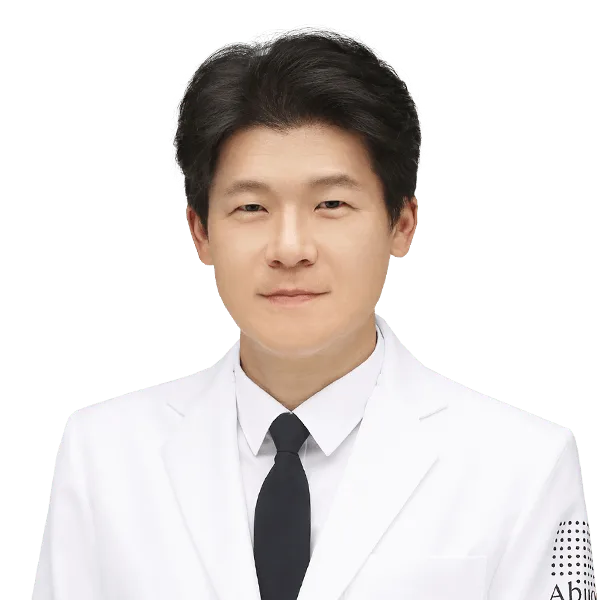
Chief MD, Hongdae
I will give my best with the attentiveness to catch even the smallest change.
Listed branch medical team — not a medical-review byline for this article.
It is a manufacturer’s name for an ultrasound technology and the device line built on it. It is not a procedure name in the way a clinical term is: the clinic decides what to call the session, which area it covers, how long it runs and what else goes with it. So two clinics can both advertise LDM and be selling materially different appointments. The word tells you the equipment; it tells you nothing about the protocol, and the protocol is what you are actually buying.
It refers to using ultrasound while a substance is applied to the skin, and it appears on the manufacturer’s own list of intended uses. That is a description of an application, not a conclusion this page can extend: nothing verified here states which substances are involved, how much of anything crosses the skin barrier, or what result follows. If a clinic pairs LDM with a product on that basis, treat the product as a separate question — what exactly it is, how much is used, and what the pairing is supposed to achieve.
The transmission part is documented and the biological part is not. Ultrasound is a mechanical pressure wave carried into tissue, and how far it carries depends on frequency — the manufacturer publishes half-value depths from about 3 cm at 1 MHz down to about 1.2-1.5 mm at 19 MHz. What happens biologically after that is, on the sources available here, proposed rather than shown: the mechanism argument appears in a paper published in Medical Hypotheses, a venue for proposing mechanisms, and the supporting laboratory work identified here was done in vitro on HL-60 cells. Physics documented, biology proposed — that is the honest summary.
The energy differs in kind, not in strength. LDM is ultrasound, a mechanical wave; a laser delivers light that is absorbed in tissue; radiofrequency devices deliver current. Because the mechanisms differ, the indications, risks, contraindications and trial results recorded for one do not carry over to another. This page holds no verified source comparing LDM with any light-based or radiofrequency device for any outcome, so if a clinic recommends one over the other, the useful question is what that recommendation is based on rather than which is more powerful.
They share a word, not a body of evidence. This page holds no verified source on focused ultrasound devices — not their indications, not their settings, not their outcomes — so nothing here supports treating a claim about one as a claim about the other. What this page can attribute to LDM is the manufacturer’s frequency and depth table and its indication list, and that is the full extent of it. If both appear on a menu, ask for each device by name separately and ask what each one is registered for in Korea.
It matters legally, and the two Korean provisions involved regulate different things. The Medical Service Act, Article 27 paragraph 1, provides that no person other than a medical person may perform medical practice and that a medical person may not act outside their licence — that provision is about who acts. The Public Health Control Act Enforcement Rule, Table 4 item 4, bars a beauty business operator from mole removal, ear piercing, double-eyelid surgery, tattooing, skin peeling and other similar medical practices — that provision is about what a beauty business may not do. Neither names devices, and whether a specific care item sits on one side of the line is a question of case law and administrative interpretation rather than something either statute states directly. The practical step is simply to ask who performs the session and under what licence.
No verified source on this page publishes pain scores, reaction rates or a downtime schedule for LDM, so any figure you are given comes from the clinic rather than from documentation that could be checked here. Ask for it in writing together with the frequency used and the area covered, and ask specifically what should be visible immediately versus later, so that what you actually experience can be compared against what you were told rather than against a general impression.
That is a decision for the doctor planning both, and this page holds no verified source on combining LDM with other procedures. What is worth knowing before you ask is what stacking costs you in information: if two things are done in one visit and the skin reacts, neither you nor the clinic can attribute the reaction to either one. Give the clinic the full list of what you have had recently, what you have booked elsewhere, and when you fly, and let the sequence be decided from that.
No verified source on this page sets a session count, an interval or a course length for LDM, and the branch menu is sold in six-minute units and a single-visit trial rather than as a defined course. Any recommended number therefore comes from the clinic’s own practice rather than from trial data that could be checked here. Ask what the number is based on, what would count as the plan working, and at what point it would be reconsidered — a plan with no review point is not a plan.
No verified contraindication list or adverse-event dataset for this device was available for this page, and that gap is exactly why your own disclosure matters more than usual. Tell the clinic about pregnancy or breastfeeding, implanted electronic devices such as a pacemaker, metal or implants near the treated area, active infection or inflamed or broken skin, any diagnosed skin condition, recent injectables, lasers, radiofrequency or surgery, and any medicine affecting healing. A doctor decides suitability from that history; a menu description cannot, and the absence of published risk data is not the same as an absence of risk.
Those entries are intended uses published by the manufacturer, which is a different thing from a demonstrated result. Each of those names is a diagnosis, and a diagnosis is made by a doctor rather than selected from a menu. The references the manufacturer itself points to are an in vitro study on cultured cells and a hypothesis paper, and no randomised controlled trial of facial LDM care could be verified for this page — so an entry on an indication list is not a reason to use a care item in place of treatment for a diagnosed condition. If you have one, raise it as a medical question first.
It records a conformity assessment, not proof that the device works. The manufacturer marks the device as a medical device and a notified body number, 2797, appears in its materials, reflecting an assessment under European rules. Which MDR risk class applies is not stated here — no document naming a class was found, and classes can differ between models in one product line — and no Korean approval is stated either. Certification in one jurisdiction does not carry to another, so ask which model is in the room and how that model is registered in Korea.
Align what is inside each quote before you compare amounts. Confirm the device model and manufacturer, the frequency used, the area covered, the actual contact time, whether anything is applied to the skin and exactly what it is, whether the quote covers one visit or a package, whether a trial visit is being compared against a full session, and who performs it. Because the menu sells in six-minute units, minutes are the easiest thing to compare and the least informative: two entries with identical minute counts can differ in frequency, area, operator and everything applied to the skin.
Suitability is decided in person, and the honest inputs to that decision are the gaps named on this page: no randomised controlled trial of facial LDM care could be verified, no session count or interval is published, and no contraindication list was available. On a short trip that argues for treating it as a minor addition to a plan rather than as the reason for the trip, and for asking what the clinic expects it to achieve in terms someone could check afterwards. Bring your medicines, diagnoses, recent procedures and travel dates to the consultation so the sequence can be judged before anything is booked.
We started in Gangnam in 2006 and the network now runs 17 branches across Korea. The line we work to is skin transformation woven into everyday life — care you can keep up with, rather than one dramatic change.
Free Consultation
There is no inquiry form on this page. Once you have picked a branch above, open that branch’s site or the official reservation center and choose a time yourself.