
Chief MD, Gangnam
Duk-ha Kim
The trust our patients have placed in this clinic was built on conviction and principle. We intend to hold to both, unchanged, through the next hundred years.
 Seoul
Seoul
Microwave body-treatment guide
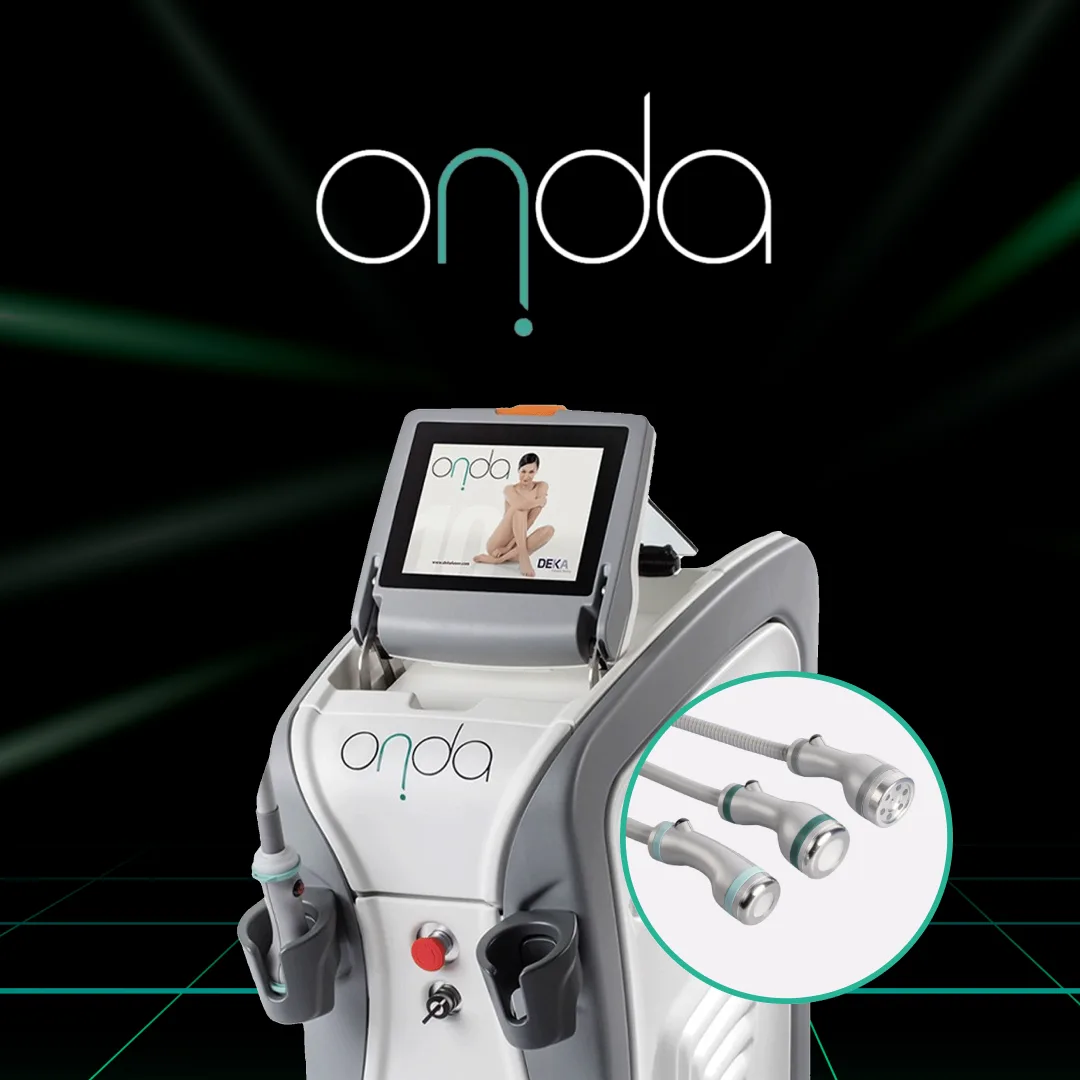
ONDA treats with 2.45 GHz microwaves — DEKA names the technology Coolwaves® — delivered through Deep or Shallow handpieces with contact cooling. It is neither a laser nor a radiofrequency device, even where a clinic menu files it under one.
ONDA is not a laser. It treats with microwaves at 2.45 GHz, a technology DEKA markets under the name Coolwaves®, delivered through handpieces applied to the skin with contact cooling. Some booking menus and clinic price lists file it under laser or radiofrequency categories; that is a category label inherited from how menus are organised, not a description of what the device emits.
They differ in where the energy is absorbed. DEKA’s Coolwaves material states that, unlike radiofrequency technologies which primarily disperse energy in superficial skin layers, Coolwaves® are preferentially absorbed by adipose tissue, enabling a deep and selective action. That is the manufacturer’s own description of absorption behaviour; it is not the result of a head-to-head trial against a named RF device.
The handpiece decides the target. DEKA describes a Deep handpiece for localized fat and a Shallow handpiece for cellulite, skin laxity and the double chin; the Coolwaves® site lists three handpieces — Pocket, Deep and Shallow — with contact cooling at 5 °C. On ONDA Plus, DEKA adds a PLUS handpiece that performs an air-flow draining massage. The published expert recommendations describe the Shallow handpiece focusing at about 0.7 cm and the Deep handpiece at about 1.2 cm.
Sources: DEKA official — ONDACoolwaves® official (DEKA)DEKA official — ONDA PlusInternational Advisory Board recommendations, Bioengineering 2024;11(12):1249
DEKA lists the abdomen, knees, hips, buttocks and underarms, with the double chin handled by the Shallow handpiece. Which areas and configurations a given clinic actually offers depends on the clinic and the market: the ONDA Plus page notes that some configurations and uses are not available in the United States.
It is an amount of energy, not a strength grade. In the published expert recommendations, the kilojoule figure is the total energy delivered to a 15 × 15 cm zone in one session: roughly 120,000–150,000 J at 120–160 W for localized fat, 140,000–170,000 J at 130–180 W for cellulite, 110,000–150,000 J for skin laxity, and 50,000–70,000 J at 60–90 W for the double chin. A menu selling 20 kJ, 40 kJ or 60 kJ is selling how much energy — and therefore how much area and time — is covered, not a stronger or weaker setting of the same treatment. Because the recommended figures are defined per zone and per indication, a menu number cannot be lined up against them without knowing how many zones are planned and which indication is being treated.
Sources: International Advisory Board recommendations, Bioengineering 2024;11(12):1249
The published protocols run as courses spaced four weeks apart. The expert recommendations describe four sessions at four-week intervals; the abdominal study used three sessions at four-week intervals and measured three months after the last one; the one-year follow-up study used four sessions. These are the conditions under which the reported measurements were taken, not a treatment plan written for an individual.
Sources: International Advisory Board recommendations, Bioengineering 2024;11(12):1249Dermatologie (Heidelberg) 2023 — abdominal subcutaneous fatSkin Research and Technology 2023 — 1-year follow-up
It is early evidence: expert consensus plus uncontrolled observation, not randomized controlled trials. The recommendations paper is a consensus document from 27 experts with no patient sample of its own, and its authors state that long-term safety and efficacy data are lacking and that randomized controlled trials are needed. The one-year follow-up (n = 34) was an observational study with no control group and no randomization — only the assessors were independently blinded — and three of its authors are employed by the manufacturer, El.En. Group; its outcome, GAIS, is a subjective global improvement scale, which moved from 3.65 ± 0.49 at one month to 2.7 ± 0.66 at one year for cellulite and from 3.52 ± 0.51 to 2.82 ± 0.88 for fat. The abdominal study (n = 19) was a prospective observational study with no control group, no randomization and no blinding, followed for three months, reporting a mean abdominal circumference reduction of 3.80 ± 1.21 cm three months after the final session. Small uncontrolled studies describe what was observed in those participants; they cannot show how much of the change the device caused, and they are not a promise of an individual result.
Sources: International Advisory Board recommendations, Bioengineering 2024;11(12):1249Skin Research and Technology 2023 — 1-year follow-upDermatologie (Heidelberg) 2023 — abdominal subcutaneous fat
The handpiece is worked across mapped zones on the body while contact cooling — specified at 5 °C on the Coolwaves® site — keeps the skin surface cool during delivery. On ONDA Plus, the PLUS handpiece adds an air-flow draining massage. How long a session takes depends on how many 15 × 15 cm zones are planned and how much energy each zone receives.
Sources: Coolwaves® official (DEKA)DEKA official — ONDA PlusInternational Advisory Board recommendations, Bioengineering 2024;11(12):1249
Only one of the sources here tracks change over time: the one-year follow-up study (n=34, no control group, no randomization, assessors independently blinded, three authors employed by the manufacturer El.En. Group). Its subjective GAIS score fell from 3.65 ± 0.49 at one month to 2.7 ± 0.66 at one year for cellulite, and from 3.52 ± 0.51 to 2.82 ± 0.88 for fat — a decline across the year on a scale that records an assessor’s impression rather than a physical measurement. The abdominal study (n=19) took its one measurement three months after the final session and does not follow participants beyond that point. Neither design separates the device’s own contribution from diet, activity or the passage of time. Ask the clinic what touch-up interval it recommends for the handpiece, area and session count planned for you, since the published follow-up runs only to one year and was not built to isolate that answer.
Sources: Skin Research and Technology 2023 — 1-year follow-upDermatologie (Heidelberg) 2023 — abdominal subcutaneous fat
Confirm the device and the plan, not just the name on the menu. Ask which model is used (ONDA or ONDA Plus), which handpiece the plan uses (Deep, Shallow or PLUS), which areas are mapped and how many 15 × 15 cm zones that adds up to, how many kilojoules go to each zone, how many sessions at what interval, who performs the treatment, and what the quote includes. Then disclose your medical history, medicines, implanted electronic devices, metal or implants near the treatment area, pregnancy or breastfeeding, skin disease or infection at the site, healing or bleeding problems, and recent aesthetic procedures in the same area. The sources cited on this page carry no device-specific eligibility list, so that judgement belongs to the treating clinician.
Sources: DEKA official — ONDAInternational Advisory Board recommendations, Bioengineering 2024;11(12):1249
This checklist is general post-procedure safety guidance, not a finding from the studies cited elsewhere on this page. Contact the clinic promptly for blistering or a suspected burn, pain that keeps increasing, spreading redness or warmth, drainage, fever, persistent or worsening numbness, a firm lump that does not settle, or an unexpected indentation or contour change. Seek emergency care for difficulty breathing, fainting, or sudden swelling of the lips, mouth, tongue or throat.
These are three different energy types, not three grades of one treatment, and this page holds no head-to-head data between them. Use the table to collect the details that make two quotes comparable at all.
| Technology | Energy delivered | Confirm before comparing quotes |
|---|---|---|
| ONDA (Coolwaves®) | 2.45 GHz microwaves through a Deep or Shallow handpiece with contact cooling | Model (ONDA or ONDA Plus), handpiece, which areas are mapped and how many 15 × 15 cm zones that means, kilojoules per zone, number of sessions and interval, what the quote includes |
| Monopolar RF | Radiofrequency current passed through tissue via a tip, usually with a return pad | Exact device and tip, the frequency, number of passes or shots, whether the quote covers one session or a course |
| HIFU | Ultrasound focused at the fixed depths of each cartridge | Exact device, cartridge depths used, number of lines or shots, treated area, how many sessions the quote covers |
This is a consultation checklist for lining up what each quote contains. It is not a ranking and not an efficacy comparison — the sources cited here describe ONDA only.
Sources: Coolwaves® official (DEKA)DEKA official — ONDAInternational Advisory Board recommendations, Bioengineering 2024;11(12):1249
Care is provided by the medical team at the branch you select. These clinicians lead the three branches linked from this guide; confirm the doctor assigned to your visit with that branch.
Chief MD, Gangnam
The trust our patients have placed in this clinic was built on conviction and principle. We intend to hold to both, unchanged, through the next hundred years.

Chief MD, Myeongdong
I want to be thinking about how the patient feels right up to the last moment of the procedure.

Chief MD, Hongdae
I will give my best with the attentiveness to catch even the smallest change.
Listed branch medical team — not a medical-review byline for this article.
Coolwaves® is DEKA’s brand name for the patented microwave technology used in ONDA, operating at 2.45 GHz. It names how the energy is generated and delivered; it is not a separate treatment you book on its own, and it is neither a laser wavelength nor an RF frequency band.
It is DEKA’s extended configuration of the same 2.45 GHz microwave platform. ONDA Plus adds a PLUS handpiece that performs an air-flow draining massage alongside the microwave handpieces, and DEKA notes that some configurations and uses are not available in the United States. Both published studies cited on this page used Onda Plus, so if a clinic quotes those numbers it is worth asking which of the two units they operate.
Because of how the tissue absorbs it. DEKA states that Coolwaves® are preferentially absorbed by adipose tissue, enabling a deep and selective action, whereas radiofrequency technologies primarily disperse energy in superficial skin layers. Depth also depends on the handpiece — the expert recommendations describe focusing at about 0.7 cm for Shallow and about 1.2 cm for Deep — and contact cooling at 5 °C keeps the surface cool while energy is delivered. That describes the delivery mechanism; on its own it does not quantify a result.
The energy itself is a different kind: ONDA emits 2.45 GHz microwaves, while monopolar RF passes a radiofrequency current through tissue toward a return pad. The only difference the sources on this page document is the manufacturer’s absorption statement — microwaves preferentially absorbed by adipose tissue versus RF energy dispersed mainly in superficial skin layers. This page holds no trial comparing ONDA with a named RF device, so it cannot say which one suits you; that is decided in person.
No — HIFU is focused ultrasound and ONDA is microwave energy, so they are different technologies. DEKA’s published material contrasts ONDA with radiofrequency, not with ultrasound devices, and this page holds no data comparing the two. Presenting one as an upgrade of the other goes beyond what the manufacturer material and the cited studies support.
No. Microwave is a category of energy, not a single device. The specifications recorded here — 2.45 GHz, the Coolwaves® technology name, the Pocket, Deep, Shallow and PLUS handpieces, contact cooling at 5 °C — come from DEKA’s material for ONDA and ONDA Plus only. Frequency, handpiece design, cooling and controls differ between systems, so ask for the manufacturer and model name rather than the category word.
The sources cited on this page publish no pain score for ONDA, so this page cannot give you a number. What is documented is contact cooling at 5 °C during delivery, which is what keeps the skin surface cool. Ask the clinic what patients typically report at the area and energy they are planning, and say so during the session if the heat stops feeling tolerable.
The sources cited here publish no downtime schedule, so treat any fixed recovery promise with caution. What they do document is the treatment rhythm: the published protocols space sessions four weeks apart, and the abdominal study measured three months after the final session. Ask the clinic that treated you about exercise, heat exposure, compression garments and flights, since only they know the area and settings used.
No. The published work used courses, not single sessions: three sessions four weeks apart in the abdominal study, and four sessions in both the expert recommendations and the one-year follow-up. A single session on a short trip does not reproduce the protocol under which those measurements were recorded, so ask what one session is expected to do on its own and whether the remaining sessions can be arranged.
Eligibility is decided at an in-person consultation, and the sources cited on this page publish no device-specific eligibility list, so no web page can clear you. Disclose pregnancy or breastfeeding, implanted electronic devices such as a pacemaker, metal or implants near the treatment area, active skin disease or infection at the site, healing or bleeding problems, the medicines you take, and any recent aesthetic procedure in the same area, and let the clinician judge.
No. ONDA works by raising tissue temperature, and any heat-based treatment carries a risk of burns, blistering, prolonged redness, swelling, tenderness or contour irregularity. Non-invasive means no incision, not no risk. Confirm with the clinic which reactions they expect, how long those usually last, and who to contact outside opening hours.
This page cannot confirm that. A direct search of the openFDA 510(k) database did not return an entry for ONDA or Coolwaves, so no U.S. clearance is claimed here. What can be stated is narrower: DEKA’s own product material lists Onda PRO in its United States and Canada catalogue, and the ONDA Plus page notes that some configurations and uses are not available in the United States. Regulatory status is decided country by country and public databases cannot always be searched reliably by brand name, so ask the clinic which model they operate and under which national registration.
Line up what each quote contains before comparing the amounts. Confirm the model (ONDA or ONDA Plus), the handpiece, the exact areas mapped and how many 15 × 15 cm zones that means, the kilojoules delivered per zone, the number of sessions and their interval, who performs the treatment, and whether follow-up is included. A menu selling 20 kJ, 40 kJ or 60 kJ is selling an amount of energy, and therefore an amount of area and time, rather than a stronger version of the same treatment — so two quotes with different zone counts are not the same treatment at all.
DEKA positions the Deep handpiece for localized fat and the Shallow handpiece for cellulite, skin laxity and the double chin, on areas including the abdomen, knees, hips, buttocks and underarms. It is not presented as a weight-loss or obesity treatment: the measurements cited on this page are abdominal circumference in a 19-person uncontrolled study and a subjective global improvement scale in a 34-person uncontrolled study, neither of which is a body-weight outcome. Whether it fits your goal is a consultation question.
We started in Gangnam in 2006 and the network now runs 17 branches across Korea. The line we work to is skin transformation woven into everyday life — care you can keep up with, rather than one dramatic change.
Free Consultation
There is no inquiry form on this page. Once you have picked a branch above, open that branch’s site or the official reservation center and choose a time yourself.